
Subscapularis-Sparing Shoulder Replacement Surgery
Subscapularis-sparing shoulder replacement is a new and innovative technique in shoulder surgery that has the potential to offer patients faster recovery time and a quicker return to their sports and activities. Only a handful of orthopedic surgeons are performing this technique in the United States, and Dr. Theodore Blaine at the Hospital for Special Surgery is one of them. Dr. Theodore Blaine successfully performed a subscapularis-sparing stemless anatomic shoulder replacement in February 2026.
Traditional Approach to Shoulder Replacement Surgery
Total shoulder replacement surgery, otherwise known as total shoulder arthroplasty, is a highly successful procedure that reduces pain and restores mobility and function in people with end-stage shoulder conditions, including shoulder arthritis. There are two general types of shoulder replacements, including anatomic total shoulder replacement and reverse total shoulder replacement. At this time, this technique is only done for anatomic total shoulder replacement surgery.
During the procedure for an anatomic total shoulder replacement, the arthritic and damaged humeral head (the ball of the shoulder joint) is replaced with a metal ball, and the glenoid cavity (the joint socket) is replaced with a smooth plastic socket.
In order to access the ball and socket joint in the shoulder and replace the joint, the surgeon must detach the subscapularis, one of the four rotator cuff muscles responsible for shoulder stability and range of motion of the shoulder. Traditionally, the subscapularis is detached at the beginning of the procedure and then thoroughly repaired at the end of the procedure, once the joint has been replaced.
To protect the repairs done on the subscapularis after surgery, we require immobilization of the shoulder joint using a shoulder sling. This sling is typically required for the first 4-6 weeks after surgery. Post-operative recovery focuses on avoidance of vigorous and strenuous activities involving the operative extremity to allow for optimal healing of the subscapularis muscle.
What is the Subscapularis?
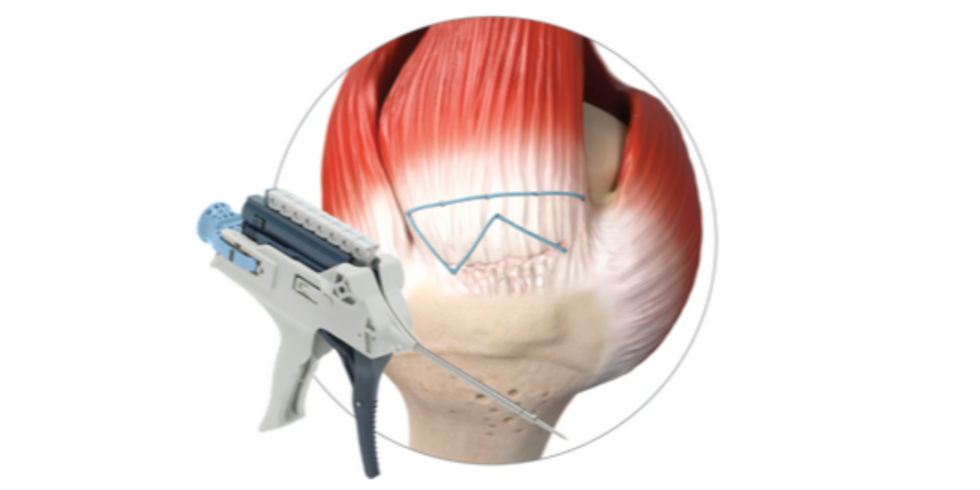
The subscapularis muscle is one of the four rotator cuff muscles in your shoulder. It is a large, triangular muscle located on the front of your shoulder that aids in internal rotation of the arm and shoulder stabilization. Internal rotation is a valuable motion as it is involved in everyday actions like reaching behind you, fastening a bra, or pushing up from a chair.
Subscapularis-Sparing Technique
The subscapularis-sparing approach to anatomic total shoulder arthroplasty is an innovative technique that minimizes damage to the subscapularis muscle by avoiding detachment or only partially detaching it during the procedure. If no detachment or minimal detachment occurs, the subscapularis is "spared" the requirement of a thorough repair to restore function. Theoretically, if there is less repairs done to the subscapularis at the time of surgery, patients would not require as much protection and shoulder immobilization as a traditional anatomic total shoulder replacement. This means patients may spend less time in their sling and return to their normal activities faster.
Are You a Candidate?
We mentioned that there are different types of shoulder replacement surgeries, including anatomic total shoulder replacements and reverse total shoulder replacements. This technique is being offered to certain patients who qualify for an anatomic total shoulder replacement at this time. To determine if this is an option for you, schedule an appointment with Dr. Theodore Blaine at Hospital for Special Surgery by calling (203)705-0766.


Comments